A lawyer asks Jesus a precise question. Who is my neighbor? It is a definitional question and it has a definitional answer available. Jesus does not give it. He tells a story about a man beaten on a road, and he makes the hero the one person in the story his audience despised.
Then he hands the question back. Which of these three was a neighbor? The lawyer has to answer it himself, out loud, against his own prejudice.
A definition would have let the lawyer file it away and stay who he was. The story made him convict himself. That is the difference, and it is the whole reason story matters in ministry.
I bring this up because storytelling has become a word ministries use without meaning much by it. Usually it means making the marketing feel less like marketing. That is not what this is.
What story actually does
An argument invites a counter-argument. The moment you make a case, the person across from you starts building their rebuttal, and now you are both defending positions instead of changing.
A story does not offer that handle. There is nothing to rebut in a woman describing the year she stopped drinking. You cannot disagree with it. You can only sit in it, and while you are sitting in it you are running her life against yours without meaning to.
Nobody has ever changed their mind because they lost an argument. People change when they see somebody they recognize on the other side of a decision.
The advertising research agrees, for what that is worth
Les Binet and Peter Field studied 996 campaigns for the Institute of Practitioners in Advertising. Emotional, story-driven work was about twice as likely to produce very large profit gains as rational, information-driven work. Kantar and WARC found the most creative and effective ads generate more than four times the profit.
996
campaigns studied by Binet and Field, who found emotional work roughly twice as likely to produce very large gains (IPA)
I want to be careful with that evidence. It is advertising research, not ministry research, and the two are not the same thing. It tells you that emotion outperforms information at changing behavior. It does not tell you that your testimony video will grow your church, and anyone who says otherwise is selling something.
What it does confirm is the mechanism. Information gets evaluated. Emotion gets absorbed. That is true whether you are selling insurance or inviting someone to Easter.
Why most ministry stories fall flat
The usual failure is that the story is about the ministry. The food pantry served this many families. The trip reached this many people. Those are reports, and nobody has ever been moved by a report.
The second failure is resolution that comes too fast. Someone describes a hard season for nine seconds and then everything is fine because of Jesus. Even people who believe that is exactly what happened will not believe the video, because real change does not move at that speed and everyone watching knows it.
Leave the tension in. A story where something is still unresolved is more credible than one tied off with a bow, and credibility is the entire asset you are trying to build.
Where this crosses a line
Story is powerful in the direction of truth and it is equally powerful in the direction of manipulation. The same techniques work either way. That should make us more careful than most people in this industry are.
The test I use is simple. If this person watches the finished film in five years, will they be glad they were in it? Not will they consent today, in a moment when their pastor is asking and it feels hard to say no. Will they be glad later.
We have cut footage that would have worked because the answer was probably not. That is a real cost and I think it is the right one. The full version of that standard is worth reading before you film anybody's hardest year.
The people in your stories are not content. They are congregants who will still be sitting in your building long after the campaign is over.
What to do with this on Sunday
Pick one person whose life is different because of something your church did. Not a category of people. One person with a name.
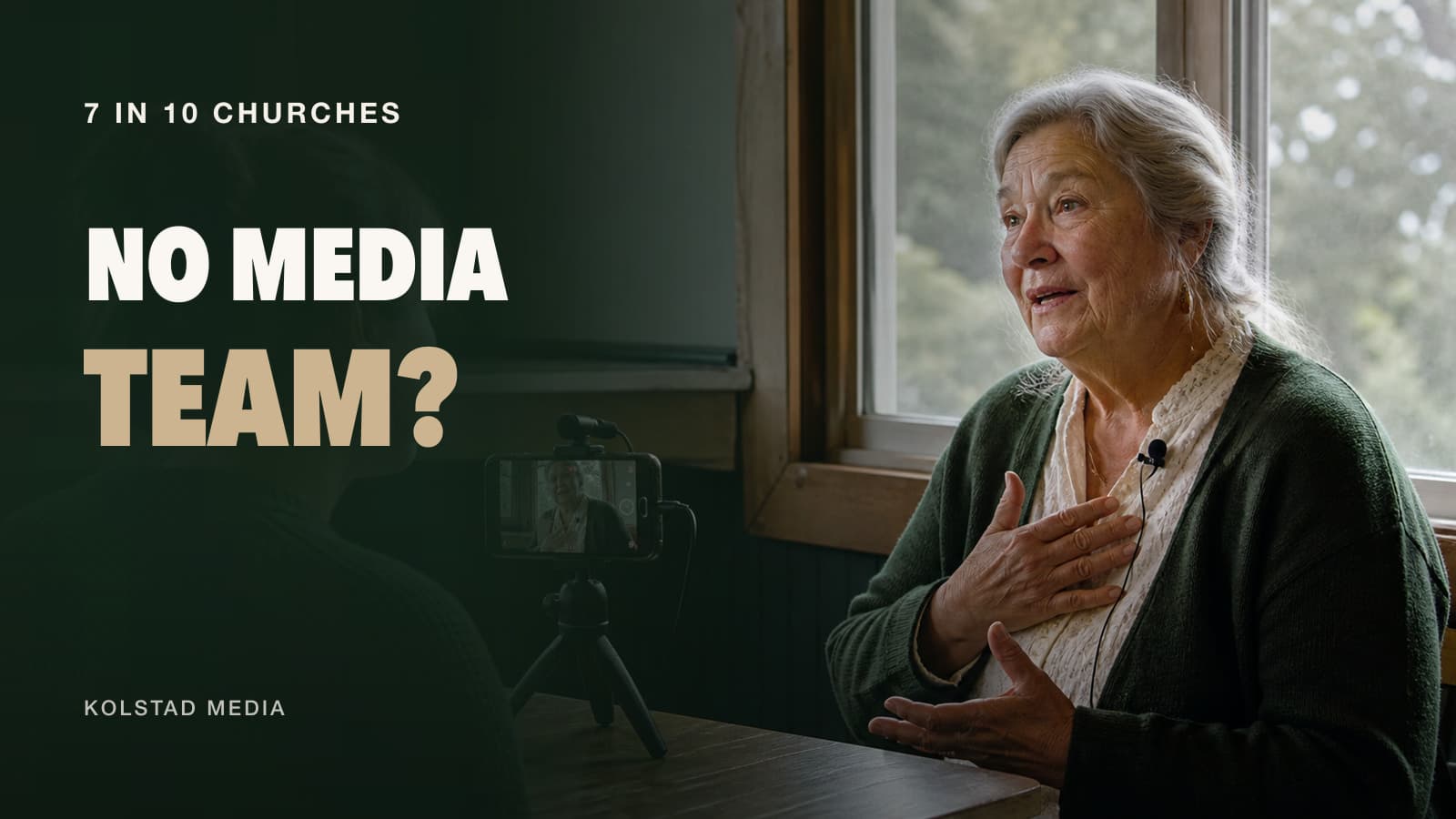
Ask them three questions on a phone. What was it like before. What actually happened. What is different now. Ask about the hard part first, and do not send the questions ahead of time.
That is a real story, and it will outperform anything you could write about your ministry in the same amount of time. The parable worked because it was about a specific man on a specific road who got specifically ignored. Yours works the same way.
If you want help finding the story worth telling and making it well, that is the work we do.
Book a Free Discovery Call