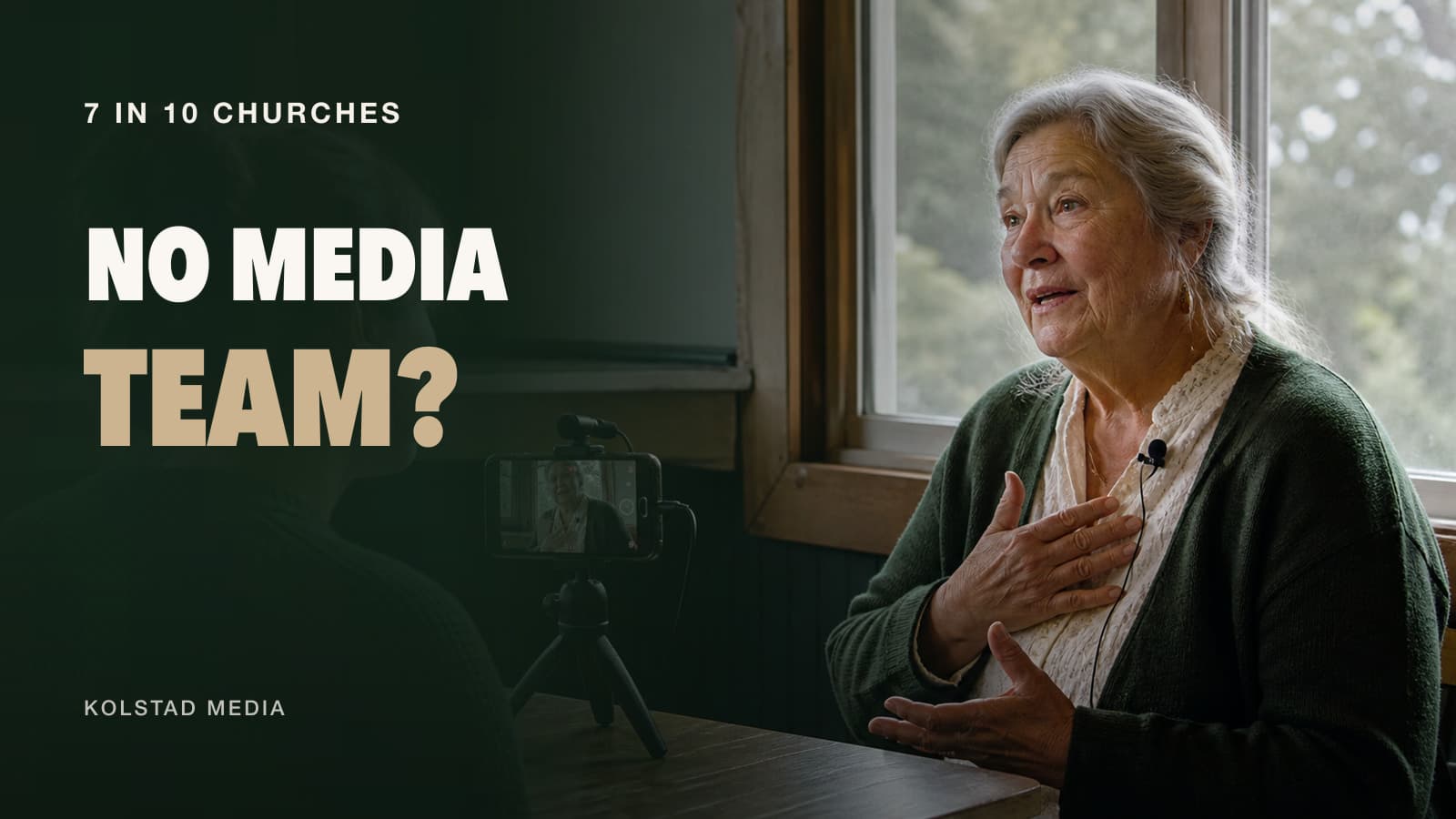
Here are two numbers that explain why so many faithful pastors feel invisible right now. Seven in ten U.S. congregations have 100 or fewer people on a weekend. And the largest 9 percent of churches hold about half of all American churchgoers.
So the typical church is small, but the typical churchgoer attends somewhere big. Which means the media you see, the conference talks you hear, and the standards you compare yourself against are almost all coming from the 9 percent.
7 in 10
U.S. congregations have 100 or fewer weekly attendees (Lifeway Research, 2026)
That comparison does real damage. I have sat with pastors who genuinely believe their church is not worth filming because it does not look like the church with the fog machine and the four-person media staff.
I want to make an honest case for the opposite. Not a pep talk. An actual argument, and then a plan you can run this month.
The advantage you actually have
Big churches have production capacity. You have something they mostly cannot buy, and it is the thing that makes film work.
- You know the names. You know whose marriage almost ended, whose son came home, who has quietly served for eleven years. That knowledge is the raw material of story, and it does not scale.
- You have trust. People will say true things on camera because it is you asking, not a stranger from the media department.
- You have access. No approval chain, no brand committee. You can decide on Tuesday and film on Thursday.
- You are believable. Polished institutional video is now read with suspicion. Ordinary and real is the harder thing to fake.
Production value gets someone to stop scrolling. Story is what makes them stay, feel something, and act. You are short on the first and rich in the second, and the second is the one that matters.
Stop trying to run their playbook
The most common mistake I see in small churches is trying to copy the big church content calendar at one tenth the capacity. Post daily. Clip every sermon. Cover every event. Run four platforms.
That plan is built for a staff you do not have, and it burns out the one volunteer who was willing to help. Then the church concludes it is bad at media. It is not. It ran the wrong plan.
One good story every quarter will do more for your church than four rushed posts every week.
The plan I would actually run
Pick four stories for the year, not forty
One per quarter, tied to something already on your calendar. A baptism season, a mission trip, a year-end giving push, an anniversary. Four is achievable. Forty is a fantasy that ends in nothing.
Decide the story before you film anything
One person, one change. Write it in one sentence. If you cannot say it out loud in under a minute, you are not ready to film it. This step costs nothing and saves everything.
Film a real conversation, not an interview
Sit down with one person for twenty minutes. Ask about the hard part first. Do not send questions ahead of time, because rehearsed answers are dead answers. Newer phones shoot better than the cameras most films were made on ten years ago.
Get five supporting shots, no more
Their hands. The room where it happened. A wide shot of the church. People arriving. One detail that means something to them. Ten minutes of filming, and it is enough to cut a real film.
Use it in five places, not one
Sunday service, email, social, the giving page, and the welcome page. Most churches make one film and use it once. That is where the value gets left on the table.
Two things worth spending money on
If you have a little budget, do not spend it on a camera. Spend it here.
- Audio. A basic clip-on microphone costs less than a nice dinner and does more for perceived quality than any camera upgrade. People forgive soft footage. Nobody forgives bad sound.
- Light. Film near a window with the person facing it. Free, and it is the single biggest visual upgrade available to you.
That is the whole gear conversation. Everything else is a want.
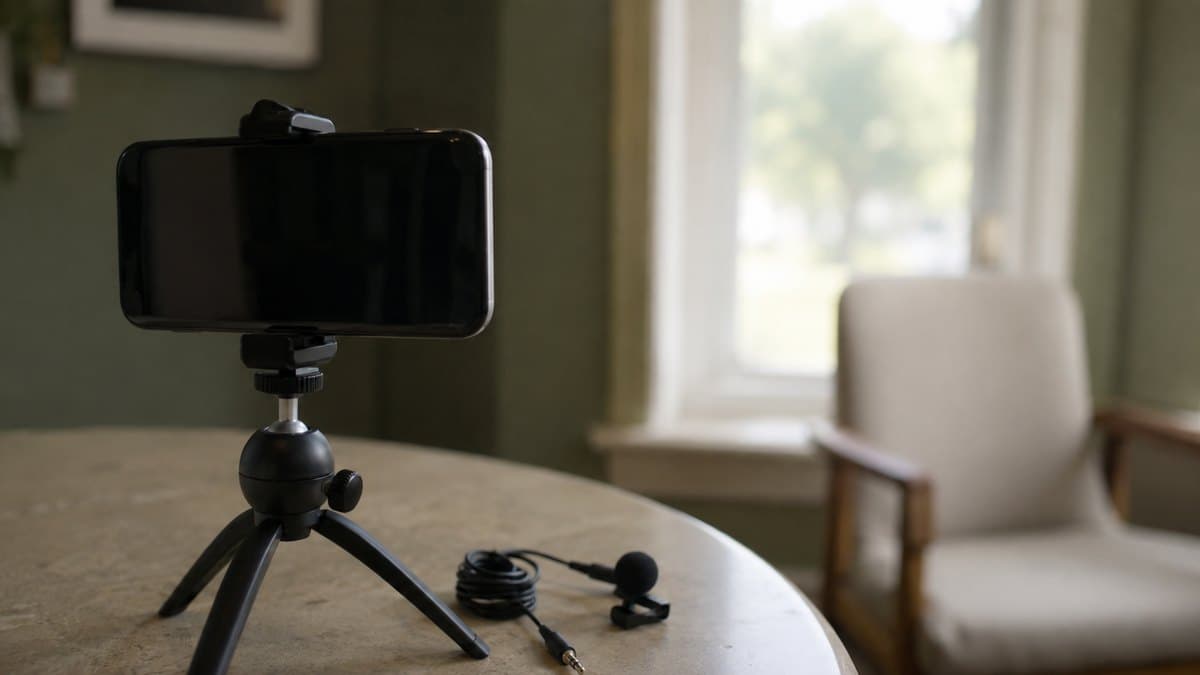
A quiet room, a window, a phone, a clip-on mic, and one story you actually decided in advance. That setup has moved more people than most church production budgets.
About the churches closing
One more number, because it is part of the pressure you feel. In 2024, about 4,000 U.S. Protestant churches closed while about 3,800 opened. A net loss of roughly 200 congregations.
I do not share that to scare anybody. I share it because the churches I watch make it through hard seasons have one thing in common. Their people can say clearly what the church is for and who it has helped. That clarity is not an accident. It gets built, repeated, and shown.
Small does not mean quiet. It means every story you tell has to count. Yours can.
We put the whole approach on two pages. The five shots, the questions that get real answers, and the one-sentence story test. It is built for a volunteer with a phone and no experience.
Get the free Small Church Story Kit and film something real this month.
Get the Free Story Kit